AI Is Not Funes: On Memory, Forgetting, and What Makes Intelligence Intelligent
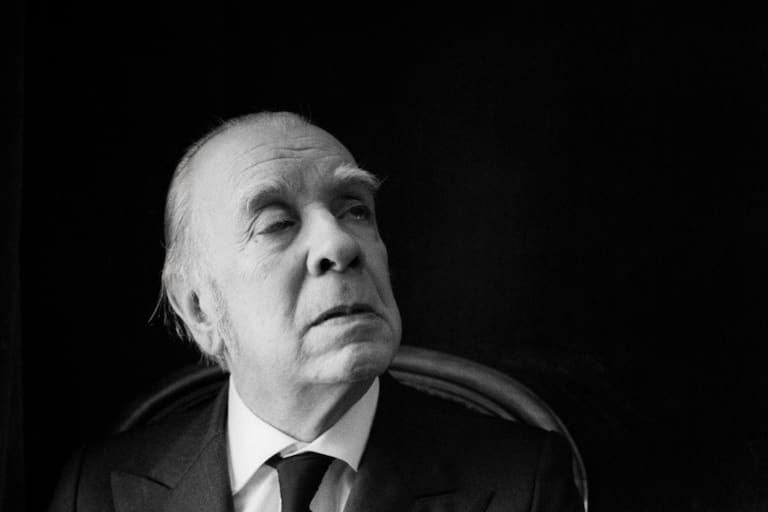
Jorge Luis Borges, autor de Funes el memorioso.
There is a short story by Jorge Luis Borges called Funes el memorioso. Ireneo Funes, after a riding accident, gains the ability to remember everything. Every leaf on every tree. Every time he ever saw that leaf. Every cloud formation, every face, every moment — with perfect, total, unbearable fidelity.
Funes cannot sleep. He cannot think. Because thinking, Borges tells us, is to forget differences, to generalize, to abstract. “To think is to forget.”
Funes is not intelligent. He is a library with no index.
Raw Data Is Not Memory
We often conflate data with memory, but they are fundamentally different things.
A security camera records everything that occurs in a room. Perfect fidelity, zero memory. It cannot tell you what mattered. It cannot connect today’s unusual visitor to the one from six months ago who stole something.
Memory is data that has survived a filter — shaped by relevance, repetition, and meaning. LLMs, by default, have no such filter applied to you. Every conversation starts fresh. What they carry is knowledge baked into weights during training — closer to intuition than memory.
But memory can be built on top of them. And the way it works is surprisingly human.
A Process I Built
I’ve been running an experiment on my work machine. Every day, a scheduled job — powered by Claude, with Opus 4.7 making the actual curation decisions — reviews what happened the previous day: decisions made, information gathered, preferences expressed. Its task is not to store everything. That would be Funes. Its task is to identify what’s worth keeping.
Some things get stored as working memory, available for a few days or weeks. If something gets referenced again, it graduates to long-term memory. If it doesn’t — if it was a one-off that never resurfaces — it fades. Gets forgotten.
Sound familiar? It should. It’s almost exactly how human memory consolidation works. While we sleep, the brain selectively moves experiences from the hippocampus to the cortex. What gets moved? Things encountered multiple times, or that fit patterns we already have. Everything else dissolves.
The result is an assistant that, over time, actually knows me. Not because I configured it — because it learned what matters, and learned to let go of what doesn’t.
AI Is Not Funes
The temptation in AI design is to treat perfect recall as the goal. More storage. Infinite context windows. But Funes is a cautionary tale, not a blueprint.
An AI that remembers everything would be paralyzed by noise. It would treat a throwaway comment with the same weight as a deeply held preference expressed a hundred times. It would fail to generalize — because generalization requires forgetting the specific in order to see the pattern.
The best AI memory systems, like the best human minds, are selective. They forget intentionally. They compress. They abstract. They build models of the world, not recordings of it.
Where Is This Going?
The approaches are converging fast: longer context windows (brute force, expensive), retrieval-augmented generation (surgical but requires curation), and episodic memory systems like the one I’ve been building — capture, consolidate, reinforce, forget.
My guess is that memory — not raw capability — becomes the defining competitive dimension in AI products over the next months (or years?). Most frontier models are already more capable than most users need. The model that knows you, over time, will win.
The Question Worth Asking
If AI starts memorizing for us — our decisions, our professional context, our history — what will we memorize?
We already offload phone numbers and addresses to our devices. Maybe freeing up cognitive load is a net positive.
Or maybe memory isn’t just storage. Memory shapes identity. The things you remember about yourself — your failures, your hard-won lessons, the decisions that cost you — aren’t neutral data. They’re the raw material of who you are.
If we outsource that entirely, what do we lose?
I don’t have a clean answer. But I think the right posture is deliberate curation: decide what you want the AI to remember for you, and be intentional about what you keep for yourself.
Borges thought forgetting was necessary for thought. Maybe it’s also necessary for selfhood.
The future of AI memory isn’t Funes. It’s not about remembering everything. It’s about learning, finally, how to forget.